
01
25 g thousand grain weight → 256 plants/m²
Smaller seed means more seeds in every kilogram.
SeedSmart · Designed and made in Australia
The same kilograms per hectare can put very different numbers of seeds in the ground. Seed size changes with the variety, season and seed lot — so last year’s rate may not give this year’s target stand.
Designed and manufactured in Australia by ARES, SeedSmart makes counting a seed sample simpler. Count it, weigh it, work out your thousand grain weight, then plan a seeding rate for your paddock.
Choose your set size: medium inserts count 50–500 seeds; large inserts count 100–1,000 seeds, depending on the crop and cell size. Buy three or more inserts of the same set size to receive one matching base-and-lid kit free.
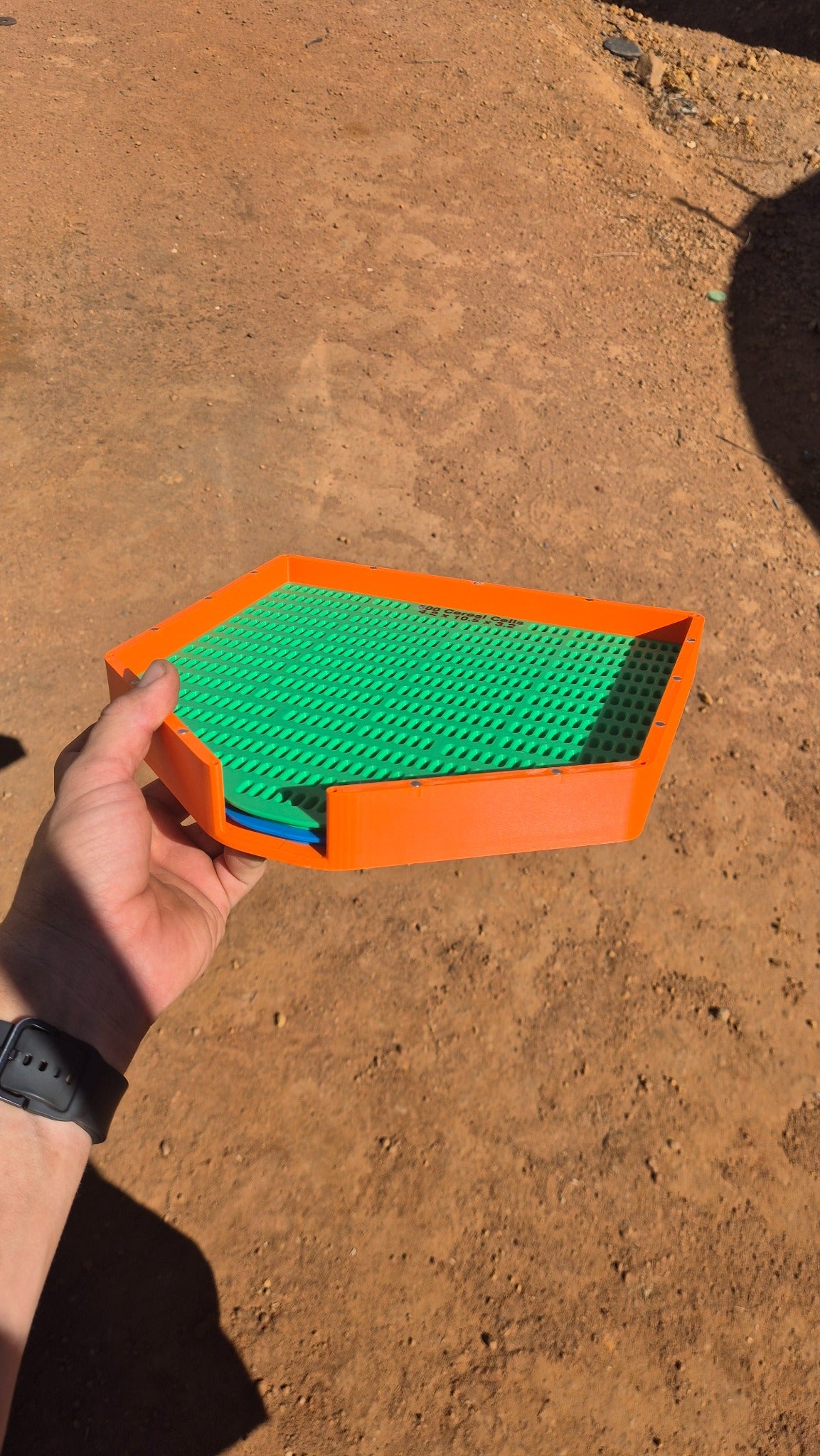
Same weight. Different seed numbers.
01
Smaller seed means more seeds in every kilogram.
02
A different seed lot can change your potential plant population at the same seeding rate. As a rough guide, wheat averages around 36 g per 1,000 seeds, but this varies with variety, season and seed lot. Weigh your own sample before setting your seeding rate.
03
Larger seed means fewer seeds in every kilogram. These examples assume 80% combined germination and establishment. They are comparisons, not recommended plant targets.
SeedSmart / Choose by seed fit
Choose the inserts that suit your seed. Buy any 3 or more eligible medium inserts and receive one medium base-and-lid set free. Mix colours or choose multiples.
Cell shapes help reduce doubles, but always inspect the filled insert. Seed size can vary between seasons, varieties and lots.
Medium sample counts: oilseed 500 (weight ×2), cereal 250 (×4), most pulse inserts 100 (×10), brown pulse insert 50 (×20). Use a complete sample with one seed per cell.
One free medium base-and-lid kit per order when you buy at least three medium inserts, while available. Medium and large quantities qualify separately; both offers can apply to a qualifying order. Kits and QuickChem gauges do not count. These offers can combine with eligible product discounts, but not order or shipping discounts. Shipping is additional.
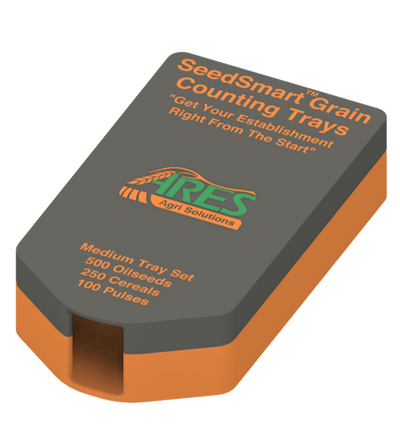
Also available separately
Stores your medium SeedSmart inserts together. Inserts are sold separately. Buy at least three eligible medium inserts to receive one base-and-lid set free.
$87.00 AUD · including GST
View product →SeedSmart / Choose by seed fit
Choose the inserts that suit your seed. Buy any 3 or more eligible large inserts and receive one large base-and-lid set free. Mix colours or choose multiples.
Cell shapes help reduce doubles, but always inspect the filled insert. Seed size can vary between seasons, varieties and lots.
One free large base-and-lid kit per order when you buy at least three large inserts, while available. Medium and large quantities qualify separately; both offers can apply to a qualifying order. Kits and QuickChem gauges do not count. These offers can combine with eligible product discounts, but not order or shipping discounts. Shipping is additional.
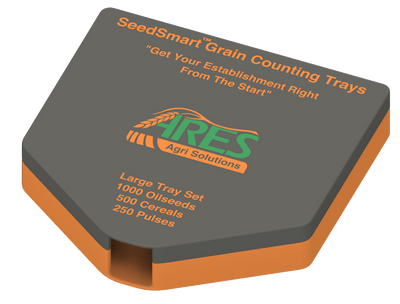
Also available separately
Stores your large SeedSmart inserts together. Inserts are sold separately. Buy at least three eligible large inserts to receive one base-and-lid set free.
$134.00 AUD · including GST
View product →SeedSmart · Designed and made in Australia
1. Sample the seed you will sow. Take a representative sample after cleaning and treatment, drawing from several portions of the seed lot. Check different varieties and lots separately.
2. Fill, shake and inspect. Work on a flat, clean, well-lit surface. Gently shake seed across the insert, tip away the excess and check every cell contains one seed. Remove doubles with tweezers. Frequent doubles may mean a smaller insert is needed.
3. Weigh and repeat. Transfer the complete counted sample to a calibrated scale and tare the container. Repeat samples to check consistency. The guide suggests 0.1 g resolution for cereals and pulses and 0.01 g for oilseeds; choose a scale that reads your sample reliably.
4. Convert to thousand grain weight, then calculate. Multiply your sample weight by the factor for your insert below. Use a germination test and an appropriate field-establishment estimate alongside your plant target.
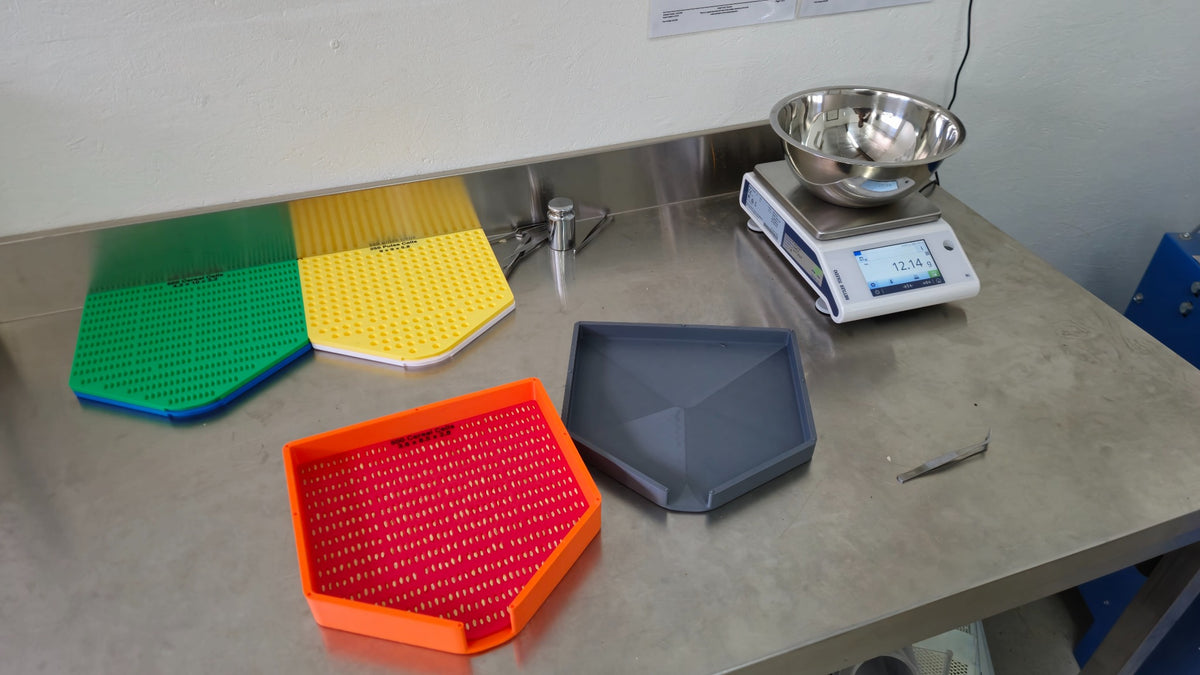
SeedSmart / thousand grain weight
Measure your thousand grain weight (thousand grain weight), then use your germination result and expected field establishment to calculate a starting seeding rate.
1,000 seeds: weight × 1 · 500 seeds: weight × 2 · 250 seeds: weight × 4 · 100 seeds: weight × 10 · 50 seeds: weight × 20. Example: 250 seeds weighing 11.25 g gives a thousand grain weight of 45 g. Use the actual cell count on your insert.
kg/ha = target plants/m² × thousand grain weight (g) × 100 ÷ (germination % × field establishment %)
Enter percentages as whole numbers: 95 means 95%. Field establishment here is the proportion of germinated seed expected to establish. If you already use a combined germination-and-establishment percentage, do not apply germination twice.
Choose a plant target and establishment estimate appropriate to your crop, variety, paddock and sowing conditions with your agronomist. This calculation is a planning aid; calibrate your seeder and check establishment in the paddock.
Practical details
01
Wipe dry between samples. When needed, clean with mild soapy water, rinse and dry completely before storage. Follow the handling instructions for treated seed.
02
thousand grain weight is one part of the job. Check germination, choose a suitable establishment target, calibrate your seeder and count the plants that establish.
03
Tell ARES what you are working with. We welcome ideas for custom cell sizes and colours; contact us to discuss fit and lead times.
Looking ahead
Large and medium SeedSmart inserts are available now. Small trays are planned; specifications, pricing and availability will be announced when ready.
Planned range. Have a use for a smaller tray? Your feedback can help shape what comes next.